
 By
By 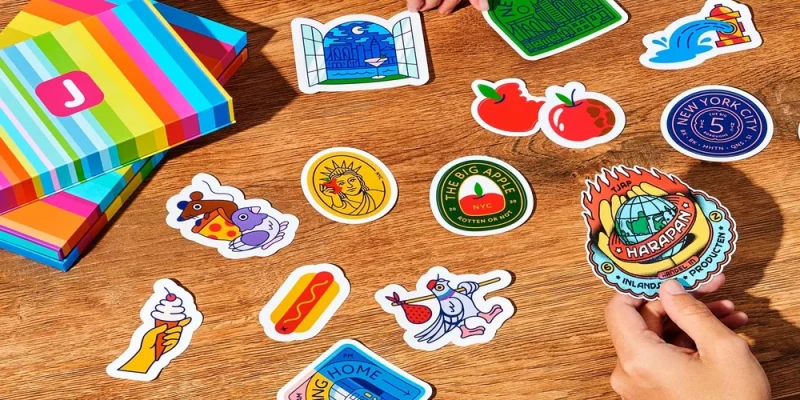
You can spot a well-designed sticker from across a room. The colours are clean, the shape is crisp, and you know what it is at a glance. A poorly designed one looks muddy, has tiny text nobody can read, and starts peeling at the corners after a month.
Most of that difference comes down to decisions made before printing. Here’s how to design vinyl stickers that look sharp and hold up well.
Begin With the End Use
Where will the sticker go? A laptop lid, a water bottle, a car window, a product box, a skateboard? Each surface asks something different of the design and the material.
A sticker for a water bottle needs to cope with washing and handling. A laptop sticker needs to look good up close. A window sticker might need to be readable from a few metres away. Decide the main use first and design around it.
Design Principles That Work at Small Sizes
Go bold
Thick lines and solid shapes reproduce better than delicate detail. If part of your design is very thin, it may break up during printing or cutting.
Watch the text size
Small text is the most common mistake. If a word matters, make it big enough to read without squinting. As a rough habit, check your design printed at actual size before ordering.
Use strong contrast
Light yellow on white or dark blue on black might look fine on a bright screen but disappears in real life. Strong contrast keeps the design readable from a distance.
Leave a margin
Keep important elements away from the very edge. Cutting machines have small tolerances, and a safe margin prevents text or details from being trimmed.
Colour Considerations
Screens show colour using light, while printers use ink. That’s why a design can look different once printed. Supplying artwork in the right colour format and asking for a proof helps avoid disappointment.
If you have strict brand colours, ask your printer how they handle colour matching. Some can match specific colour references more closely than others.
White ink is worth understanding too. On clear vinyl, colours can look transparent unless a white layer is printed underneath. If you want a clear sticker with solid colours, mention it early.
Picking the Right Shape
Shape affects how professional a sticker looks. A custom cut vinyl sticker follows the outline of your artwork, so the sticker becomes the design rather than a square around it. This works especially well for logos, characters and illustrations.
Simple outlines cut more cleanly than very complex ones. If your artwork has lots of narrow points or small gaps, consider adding a thin border around the design to give the cut a smoother path.
Material and Finish Choices
Vinyl is popular because it’s flexible and generally more durable than paper. Many people choose customized vinyl stickers for items that get handled daily. Adding a laminate can help protect the print from scratches and moisture.
Finish affects mood:
- Gloss: vivid colours and a bright, energetic look
- Matte: softer, more premium, less glare
- Specialty finishes: holographic, glitter or transparent effects for special editions
Durability depends on the full combination of vinyl, ink, adhesive and laminate. If you need a sticker to handle sunlight, water or outdoor use, ask the printer for the specifications of that exact product.
Preparing Artwork for Print
- Use vector files where possible, as they scale without losing quality
- If using images, supply them at high resolution
- Outline or embed fonts so text prints correctly
- Include a cut line if your printer requests one
- Check spelling one last time
Review the Proof Carefully
Always check the proof. Look at colours, size, spelling and the cut line. It’s the cheapest moment to fix a mistake.
Testing Before a Full Run
If the sticker matters, such as a brand logo or a product label, order a small test batch first. Stick a few on the real surfaces they’re meant for and use them normally for a couple of weeks. Wash the bottle, carry the laptop, leave one near a window. You’ll learn more from that simple test than from any product description, and it costs far less than reprinting a full order.
Final Thoughts
Great vinyl stickers come from simple, bold design and a few smart technical choices. Design for the real surface, keep text readable, choose a shape that suits the artwork, and pick materials that match how the sticker will be used. Do that, and your stickers will look as good months from now as they did the day they arrived.







Comments