
 By
By 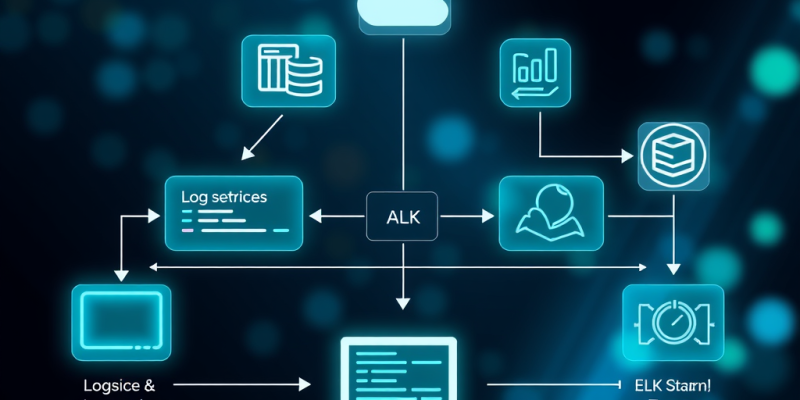
Microservices architectures are designed to help teams ship faster by splitting a large application into smaller, independently deployable services. This modularity improves agility, but it also changes the testing problem. Instead of validating one codebase and one deployment, teams must validate many services, each with its own APIs, dependencies, and failure modes. Small changes can ripple across service boundaries, producing intermittent issues that are difficult to reproduce. Stability and observability, therefore, become central goals of microservices testing. When done well, testing reduces risk while observability makes failures explainable, allowing teams to fix problems quickly and confidently.
Why Microservices Testing Is Different
Traditional application testing often assumes a single process, predictable data flow, and tightly controlled dependencies. Microservices disrupt these assumptions. Requests travel through multiple services, often across networks, queues, and caches. Each hop introduces new variables such as latency, timeouts, retries, and partial failures. A service may work perfectly in isolation but fail when downstream dependencies behave unexpectedly.
Another challenge is version drift. Services are deployed at different times, so a consumer may call an older or newer provider version. Testing must account for backward compatibility and contract stability. This is one reason why many learners prefer structured paths like a software testing course in pune, where distributed-system testing concepts are introduced with practical scenarios instead of purely theoretical examples.
Building Stability with a Layered Testing Strategy
A stable microservices system requires multiple testing layers, each with a clear purpose. Relying only on end-to-end tests is risky because such tests are slow, brittle, and often fail for reasons unrelated to the change being released. A layered approach keeps feedback fast while still validating service interactions.
Unit and Component Tests
Unit tests validate business logic inside a service without external dependencies. Component tests expand this by testing the service with local substitutes such as in-memory databases or mock servers. These tests are fast and help catch defects early.
Contract Tests
Contract testing is critical in microservices. Instead of deploying both consumer and provider together, contract tests validate the API agreement between them. This reduces integration surprises and supports independent deployments. Provider contract tests ensure that responses match what consumers expect, and consumer contract tests ensure requests are compatible with the provider contract.
Integration Tests with Real Dependencies Where Needed
Some integration tests should run with real dependencies, especially for data stores, message brokers, and authentication systems. These tests validate configurations, schemas, and connectivity. The goal is not to test everything at once, but to confirm that key interactions behave correctly in realistic conditions.
End-to-End Smoke Tests
A small set of end-to-end tests can validate critical user journeys. Keeping this suite focused reduces flakiness while still providing confidence that the system works as a whole.
Designing for Observability-Driven Testing
Observability is more than monitoring dashboards. In microservices, it is the ability to understand what happened inside the system by looking at outputs such as logs, metrics, and traces. When testing microservices, observability should be designed into the test strategy, not added later.
Structured Logging
Logs should be consistent and searchable. Include correlation identifiers so a single request can be followed across services. In tests, structured logs help diagnose failures quickly, especially when failures only happen intermittently.
Metrics for Behaviour and Health
Metrics such as request latency, error rates, and saturation indicators provide early warning signals. During load testing or chaos experiments, metrics show whether the system is degrading gracefully or failing sharply.
Distributed Tracing
Tracing is especially valuable in microservices because it reveals the path a request took and how long each service spent processing it. When a test fails due to timeouts or retries, traces can pinpoint the slow hop and clarify whether the issue is code, configuration, or dependency behaviour.
Teams that treat observability as a testing asset often troubleshoot faster and reduce the time spent arguing about where the failure originated. This mindset is frequently reinforced in a software testing course in pune that covers modern testing practices for distributed systems.
Handling Flaky Tests and Environment Instability
Microservices tests can become flaky due to timing issues, dependency volatility, or shared test environments. Flaky tests waste time and reduce trust in automation. Addressing this requires both technical and process fixes.
First, stabilise test data. Use known datasets, reset states between runs, and avoid relying on shared environments when possible. Second, control time-based behaviour. If services use retries, backoff, or asynchronous processing, tests must be designed to accommodate eventual consistency without becoming overly slow. Third, isolate failure domains. If a downstream service is unstable, consider test doubles for certain pipelines and reserve full integration checks for scheduled runs.
Finally, classify failures. A test that fails due to infrastructure issues should be flagged differently from a failure caused by application behaviour. This separation helps teams respond correctly and maintain CI reliability.
Conclusion
Testing microservices requires a deliberate approach that balances fast feedback with realistic validation. Stability comes from a layered testing strategy that includes unit, contract, integration, and carefully scoped end-to-end tests. Observability strengthens this strategy by making failures explainable through structured logs, meaningful metrics, and distributed traces. When teams combine these practices, they reduce flakiness, detect breaking changes earlier, and gain confidence in frequent releases. With the right testing discipline and observability foundations, microservices can deliver their promise of speed and scalability without sacrificing reliability.











Comments